
“What will the children do without a mother?”
Knowing my dad, his question really meant, “What will I do without you?”

I remember vividly the time I became invisible to my father.
He was home too early that night, and without my mum. My sister’s and my greetings went unacknowledged. He growled, “Siam, siam!” the Hokkien equivalent of “Scram!” as he made a beeline up to his and my mum’s bedroom, and he began pulling clothes out of the drawer. His movements were not angry, but he had a frenzied, frantic energy of a man who was drowning and trying to pull himself together. I can’t remember who asked where mum was, and he said, “Your mummy had a stroke.” And as quickly as he arrived, he ran down, revved up the car and was gone.
A stroke.
What was that? My young teenage brain couldn’t fathom it.
My sister, the smarter one, pulled out an encyclopaedia of scientific facts and looked up “stroke”.
A serious illness caused when a blood vessel in your brain suddenly breaks or is blocked.
We then realised my mum was ill and required a hospital stay.
I can’t remember what else happened later that night. I don’t think my dad returned - he must have kept vigil by my mum’s bedside in the hospital. My aunty must have put the two of us to bed, alongside my little brother who was too young to understand.
My dad was a stoic man. After that night, he dutifully sent us children to school and brought us to see her during visiting hours. He never broke character nor cried, and I never saw that side of him again for as long as he was well.
But that terrible night of the stroke let the understanding of his love for my mother seep into my bones. I’ve always known that my father loved my mother. He adored her, his gaze riveted on her and his eyes smiling when she laughed or chatted away. Yet, the night of the terrible stroke made his love for her even more tangible - I knew then that he loved her then more than all us children combined.
Close to a decade later, my mum told me the story of how he asked her to get well. “What will the children do without a mother?” Knowing my dad, his question really meant, “What will I do without you?”
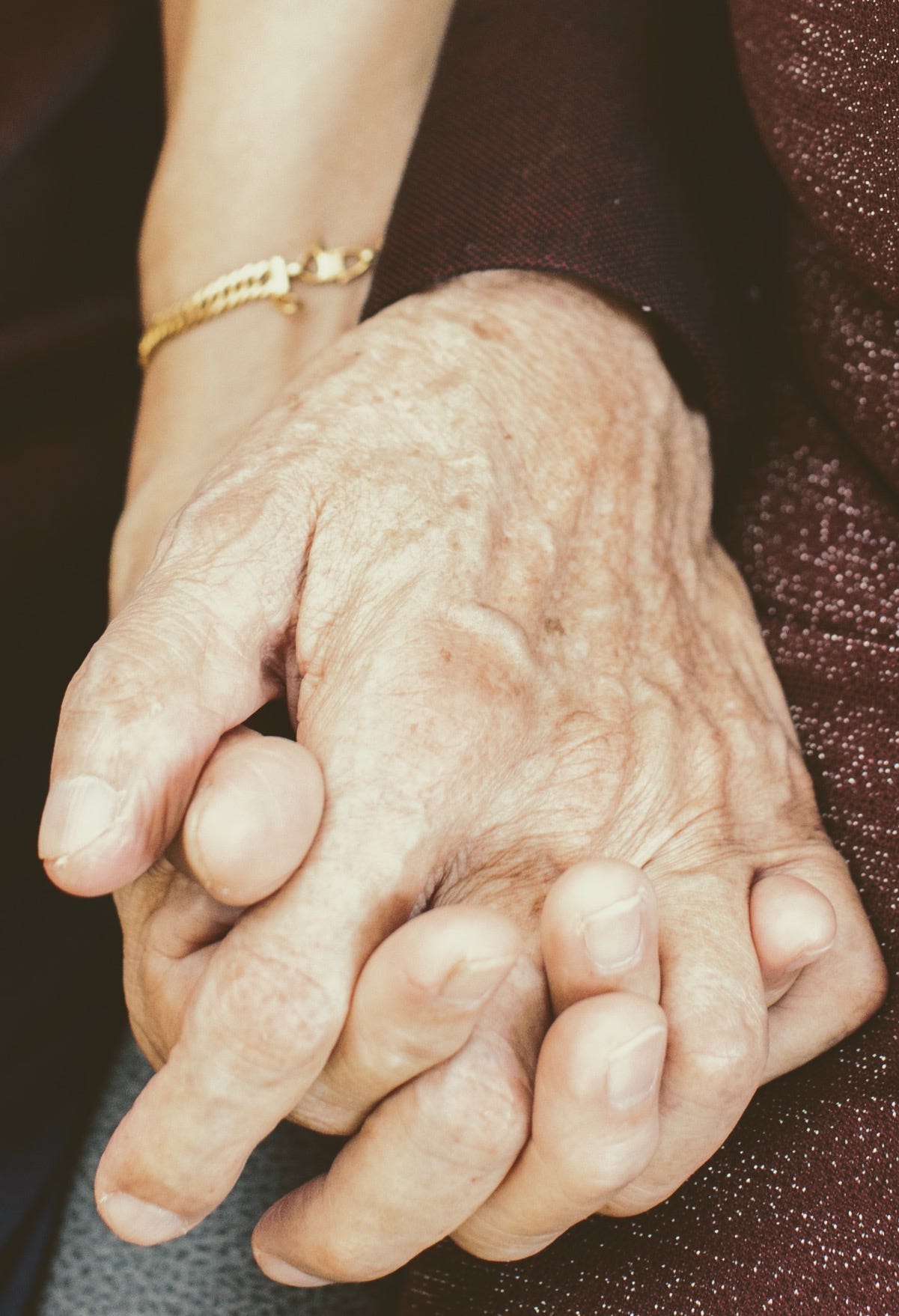
My mum got better. My mum initially lost function of her right arm, but acupuncture, physical therapy and devoted hand and arm massages by my determined father helped her regain close to 90% of its previous function. No one could tell she ever had a stroke, though she is reminded of it whenever she had to write - a scrawl is all she could muster instead of her previously beautiful penmanship.
Do I wish the stroke never happened? Of course. My mum and dad probably even more so.
But life doesn’t run on wishes. It goes its own merry way.
Nonetheless, the trials of life reveals character and love on a more fundamental level.
And if the trial of caring for a wife with a stroke was a test, my dad passed it with flying colours.
How does any of this relate to long-distance relationships?
Don’t get me wrong, long distance was hard.
However, in the grand scheme of things, the “trial” of dating my husband-then-boyfriend who is two hours away by plane and not seeing him in person everyday are “first-world” hardships compared to the painstaking recovery I witnessed. If we can’t get through something like that, I reasoned, then it’s probably not a relationship that could last, and therefore not a relationship I would want.
So early in my LDR, I laid down another principle:
If we can endure smaller trials, we have the foundation to face larger trials together in the future.
And life decided to test us to the extreme. My dad got diagnosed with dementia in 2014.